


Coping with Somatic Symptom Disorder (SSD)
Written by Niels Barends, MSc, psychologist with more than 14 years of clinical experience treating trauma, anxiety disorders, and somatic symptom disorder. Updated May 2026.
People with somatic symptom disorder (SSD) often spend a large amount of time and emotional energy focused on physical symptoms, bodily sensations, or fears about their health. Everyday sensations such as pain, dizziness, stomach discomfort, fatigue, muscle tension, or heart palpitations can gradually become a constant source of worry and mental preoccupation.
For many individuals, the distress is not only caused by the symptoms themselves, but also by the uncertainty surrounding them. Thoughts such as “What if something serious was missed?” or “Why does my body keep reacting this way?” can become difficult to let go of. As a result, people may repeatedly search for reassurance, monitor their body for signs of danger, avoid activities that might worsen symptoms, or spend hours researching possible medical explanations online.
The physical symptoms are real and can be highly distressing. However, the constant state of fear, hypervigilance, stress, and body monitoring can unintentionally intensify physical sensations even further. This may create a painful cycle in which anxiety increases physical tension and symptom awareness, which then reinforces the fear that something is seriously wrong.
Coping with somatic symptom disorder therefore focuses on breaking this cycle. This often involves reducing fear around bodily sensations, improving emotional regulation, decreasing reassurance seeking and body monitoring, calming the nervous system, and learning how to respond to physical symptoms in a less catastrophic and more balanced way.
In clinical practice, somatic symptom disorder may overlap with conditions such as anxiety disorders, complex PTSD, panic symptoms, health anxiety, or emotional dysregulation patterns seen in conditions such as borderline personality disorder. Understanding these overlaps is important because treatment often needs to address both physical symptom distress and the underlying emotional or nervous system patterns connected to it.
Important before using these coping strategies
If you experience persistent or concerning physical symptoms, it is important to first consult a medical professional to rule out underlying medical conditions. The coping strategies on this page are intended for people who have already discussed their symptoms with a healthcare provider or received a diagnosis related to somatic symptom disorder.
Coping with somatic symptom disorder guide
Need help with somatic symptom disorder?
If physical symptoms, fear of illness, or body-related anxiety are disrupting your daily life, professional support can help reduce distress and improve emotional and physical functioning.
Visit your general practitioner
If you experience persistent physical symptoms and have not yet consulted a physician or medical specialist, it is important to do so first. Some physical symptoms may have a medical explanation that requires treatment or monitoring.
Many people with somatic symptom disorder struggle because they feel uncertain about whether something serious may have been missed. This uncertainty can increase anxiety and body monitoring. Discussing symptoms with a trusted healthcare professional can help reduce unnecessary fear and clarify whether additional medical evaluation is needed.
At the same time, repeated medical reassurance does not always fully reduce anxiety in SSD. In some cases, fear and symptom monitoring continue even after medical explanations have been ruled out. This is where psychological coping strategies and therapy may become helpful.
Coping with somatic symptom disorder and trauma
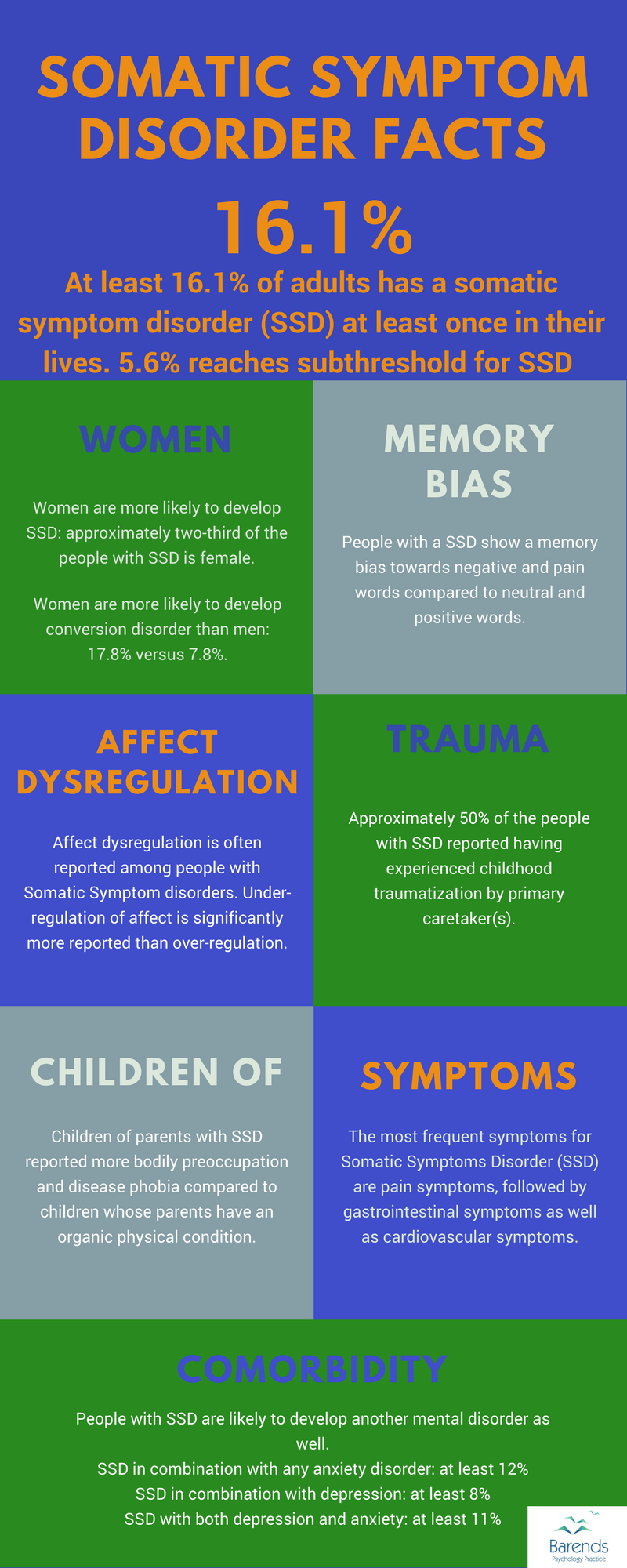
For some people, somatic symptoms become more severe after stressful or traumatic experiences. Research suggests that nearly half of individuals with somatic symptom disorder report childhood traumatization by a primary caretaker [1].
Trauma can increase nervous system sensitivity and make the body remain alert for danger. As a result, normal bodily sensations may start to feel threatening or overwhelming.
When unresolved trauma plays a role, approaches such as EMDR therapy may help reduce both emotional distress and physical symptom intensity [2],[3],[4].
If you recognize symptoms related to trauma, fear, emotional overwhelm, or hypervigilance, you may also find it helpful to explore our page about complex PTSD.
Reducing persistent worry and catastrophic thinking
One of the core features of somatic symptom disorder is persistent worry about physical symptoms. Thoughts such as “What if something serious is wrong?” or “What if the doctor missed something?” can become difficult to stop.
Over time, this can create an increased focus on bodily sensations. Research suggests that attention and memory biases may make people more likely to notice and remember physical sensations connected to fear [5].
This does not mean the symptoms are imaginary. Rather, fear and body monitoring can amplify physical sensations and increase emotional distress.
Learning to respond differently to these thoughts is an important part of coping with SSD.
Mindfulness and meditation
Mindfulness and meditation may help reduce persistent worry, emotional overwhelm, and excessive focus on bodily sensations [6],[7],[8],[9].
Instead of trying to force symptoms away, mindfulness focuses on observing thoughts and sensations with less fear and judgment. This may gradually reduce the emotional intensity connected to symptoms.
Research suggests that mindfulness-based approaches may improve wellbeing and reduce distress in people dealing with chronic pain and persistent physical symptoms [7],[8],[9].
Helpful mindset: The goal is not to “ignore” your body, but to reduce fear-driven monitoring and create a calmer relationship with physical sensations.
Reducing fear of illness
Many people with somatic symptom disorder fear that they may have a serious or undiagnosed medical condition. Even minor bodily sensations may quickly trigger catastrophic interpretations.
One helpful strategy is learning to test more balanced explanations for physical sensations.
For example:
- Muscle tension may increase after stress or poor sleep.
- Shortness of breath may occur during stress or after physical exertion.
- Stomach discomfort may worsen during periods of anxiety or emotional overwhelm.
This does not mean symptoms are “psychological only.” It means the body and nervous system often respond strongly to stress, fear, and emotional tension.
When fear becomes overwhelming or persistent, trauma-focused treatment such as EMDR may sometimes help reduce the emotional intensity connected to worst-case fears [10].
Healthy distraction and daily structure
Constant body monitoring often increases symptom awareness. One way to reduce this cycle is to stay engaged in meaningful daily activities.
Passive distraction, such as endlessly scrolling online or repeatedly researching symptoms, usually does not help for long. More effective distraction often involves activities that require focus or engagement, such as:
- reading
- creative hobbies
- exercise within safe limits
- social interaction
- work or study tasks
- structured routines
- mindfulness exercises
The goal is not avoiding symptoms completely, but reducing the amount of attention constantly directed toward the body.
Helpful self-talk strategies
People with SSD often become trapped in repetitive internal dialogues about symptoms and health fears.
One useful coping strategy is postponing symptom-related thinking rather than fighting against it completely.
For example, when health-related thoughts appear, you might tell yourself:
“I notice that I am worrying about my symptoms again. I do not need to solve this right now. I can return to this later if necessary.”
Some people find it helpful to schedule a short “worry moment” later in the day. This may reduce the urge to constantly think about symptoms throughout the day.
When professional help may be useful
It may be helpful to seek professional support if physical symptoms cause significant distress, repeated reassurance seeking, fear, avoidance, or disruptions in relationships, work, sleep, or daily functioning.
Treatment may help reduce symptom-focused anxiety, improve emotional regulation, address trauma-related patterns, and restore trust in the body.
You can learn more about evidence-based approaches on our page about somatic symptom disorder treatment.
Struggling with health anxiety or overwhelming physical symptoms?
Professional support can help reduce fear around bodily sensations and improve emotional and physical wellbeing.

References
- [1] Annemiek van, D., Julian D, F., Onno van der, H., Maarten JM, V. S., Peter GM, V. D. H., & Martina, B. (2011). Childhood traumatization by primary caretaker and affect dysregulation in patients with borderline personality disorder and somatoform disorder. European Journal of Psychotraumatology, 2, 5628.
- [2] van Rood, Y. R., & de Roos, C. (2009). EMDR in the treatment of medically unexplained symptoms: A systematic review. Journal of EMDR Practice and Research, 3, 248-263.
- [3] Schneider, J., Hofmann, A., Rost, C., & Shapiro, F. (2007). EMDR in the treatment of chronic phantom limb pain. Pain Medicine, 9, 76-82.
- [4] Demirci, O. O., Sağaltıcı, E., Yıldırım, A., & Boysan, M. (2017). Comparison of Eye Movement Desensitization and Reprocessing (EMDR) and Duloxetine Treatment Outcomes in Women Patients with Somatic Symptom Disorder. Sleep and Hypnosis, 19, 70-77.
- [5] Pauli, P., & Alpers, G. W. (2002). Memory bias in patients with hypochondriasis and somatoform pain disorder. Journal of Psychosomatic Research, 52, 45-53.
- [6] Lenze, E. J., Hickman, S., Hershey, T., Wendleton, L., Ly, K., Dixon, D., … & Wetherell, J. L. (2014). Mindfulness‐based stress reduction for older adults with worry symptoms and co‐occurring cognitive dysfunction. International Journal of Geriatric Psychiatry, 29, 991-1000.
- [7] Brown, K. W., & Ryan, R. M. (2003). The benefits of being present: mindfulness and its role in psychological well-being. Journal of Personality and Social Psychology, 84, 822.
- [8] Carmody, J., & Baer, R. A. (2008). Relationships between mindfulness practice and levels of mindfulness, medical and psychological symptoms and well-being in a mindfulness-based stress reduction program. Journal of Behavioral Medicine, 31, 23-33.
- [9] Rosenzweig, S., Greeson, J. M., Reibel, D. K., Green, J. S., Jasser, S. A., & Beasley, D. (2010). Mindfulness-based stress reduction for chronic pain conditions: variation in treatment outcomes and role of home meditation practice. Journal of Psychosomatic Research, 68, 29-36.
- [10] Marr, J. (2012). EMDR treatment of obsessive-compulsive disorder: Preliminary research. Journal of EMDR Practice and Research, 6, 2-15.