


What is loneliness? Causes, signs, and how to cope
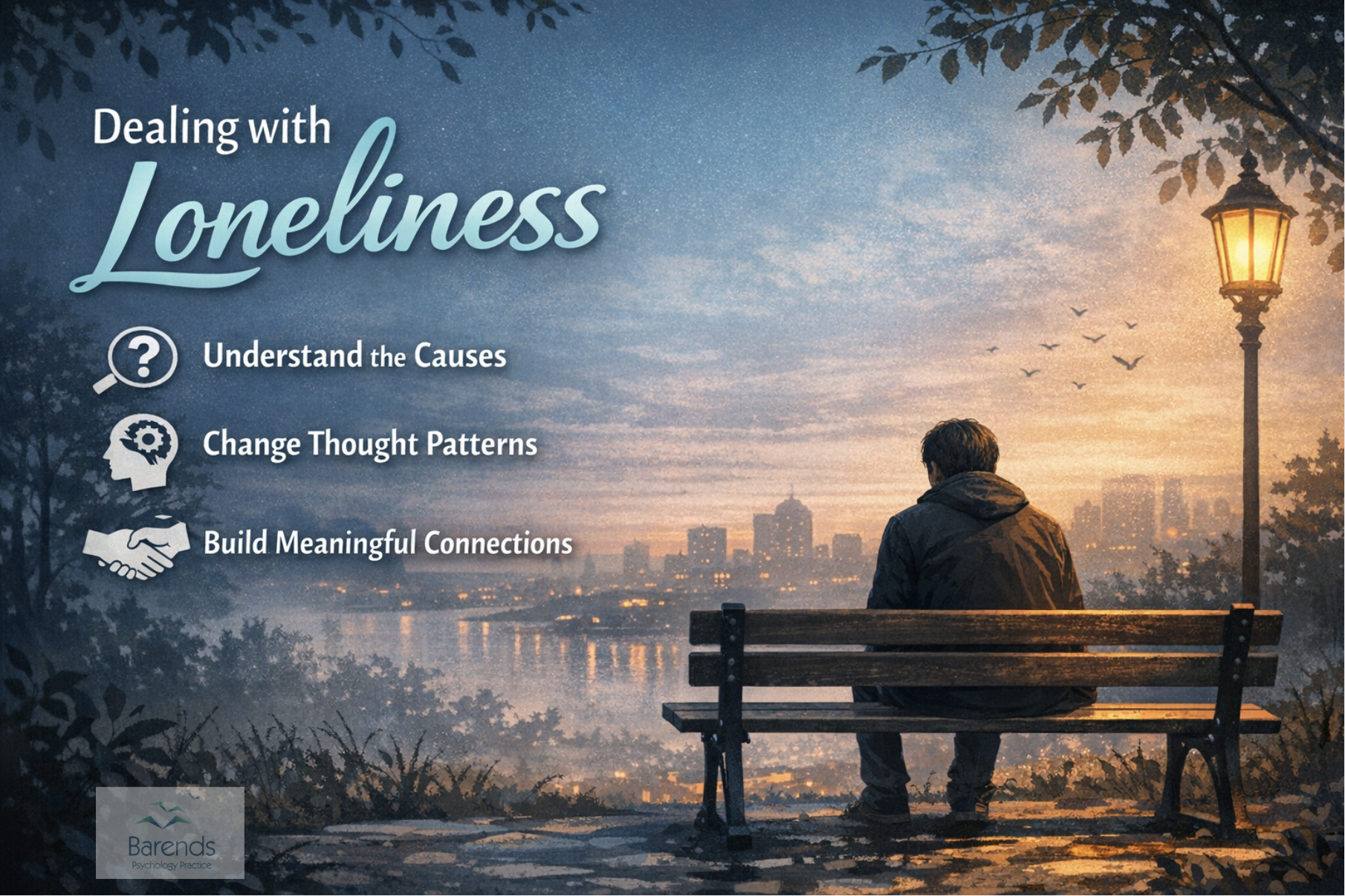
Loneliness: understanding and coping
Dealing with loneliness can be surprisingly difficult, especially when you cannot fully explain why you feel lonely in the first place. Many people assume loneliness only happens when someone is physically alone. Yet some of the loneliest people spend their days surrounded by colleagues or even a romantic partner.
Loneliness is not the same as being alone. Being alone is a situation; loneliness is a feeling of disconnection. It is the sense that something important is missing in your relationships or emotional world. This means you can feel lonely while surrounded by other people, and you can also spend time alone without feeling lonely at all.
In clinical practice, loneliness often appears when there is a gap between the connection someone wants and the connection they feel they actually have. You may feel misunderstood or emotionally distant from others, or as though nobody truly knows what you are going through. For some people, this develops after a major life change. For others, the feeling seems to appear without an obvious reason.
Loneliness is particularly common during periods of transition, stress, grief, relationship difficulties, or after moving abroad. For example, many people living overseas experience expat loneliness, where familiar sources of connection and belonging are suddenly no longer available.
For some people, loneliness is temporary and linked to a specific situation. For others, it becomes more persistent and starts affecting confidence and overall wellbeing. Loneliness can be connected to patterns such as social withdrawal and negative thinking.
That is why dealing with loneliness is often about much more than simply spending time with other people. It involves understanding what kind of connection is missing, recognizing the patterns that may be maintaining the loneliness, and taking meaningful steps toward rebuilding a greater sense of belonging.
This page explains what loneliness is, why it happens, how it can show up in different situations, and what you can do when it starts to feel difficult to overcome on your own.
Struggling with persistent loneliness?
If loneliness has started to affect your mood, relationships, or daily functioning, a structured and supportive approach can help.
Key facts about loneliness
- Loneliness is a feeling of disconnection, not simply being alone
- You can feel lonely in a relationship or in a group
- Persistent loneliness can affect mood, stress, sleep, and overall wellbeing
- Different forms of loneliness may need different solutions
- Support can help when loneliness has become chronic or emotionally overwhelming
On this page:
- What is loneliness?
- Why loneliness happens
- General ways to cope
- Loneliness in relationships
- Loneliness as an expat
- Loneliness in social settings
- When to seek help
- FAQ
Related pages:
Dealing with loneliness: how?
There are different ways of dealing with loneliness, depending on what is driving the feeling. Loneliness is not a single problem with a single solution. For some people, it is linked to life transitions such as moving abroad. For others, it is connected to patterns within a relationship, or to feeling disconnected even in social environments.
In clinical practice, loneliness is often maintained by a combination of negative interpretations and reduced opportunities for meaningful connection. Effective strategies therefore focus not only on increasing contact, but also on understanding and changing the patterns that maintain the feeling over time.
General strategies for dealing with loneliness
-
Understand what is driving the feeling of loneliness.
Loneliness often has a specific context. It may follow a loss or a gradual shift in relationships. In other cases, it may be linked to thoughts such as “I don’t belong” or “others are not interested in me.” Identifying the underlying trigger helps determine which type of change is needed, rather than applying general strategies that may not fit your situation. -
Identify when and where loneliness is most present.
Loneliness is not always constant. Some people experience it primarily when they are alone, while others feel it most strongly in social situations or after specific moments such as social events or intimacy. Mapping these patterns, sometimes through brief journaling, can make the feeling more predictable and therefore easier to address. -
Recognize loneliness as an emotional state, not an objective reality.
Dealing with loneliness is often accompanied by automatic thoughts, such as “no one understands me” or “I am not important to others.” These thoughts can feel convincing, especially when the emotion is strong. However, they are typically interpretations rather than facts. Learning to observe these thoughts, rather than fully identifying with them, is an important step in reducing their impact. -
Increase meaningful contact, not just social contact.
Not all interaction reduces loneliness. Superficial or highly structured interactions may leave the feeling unchanged. What tends to reduce loneliness is meaningful connection: conversations that involve interest or emotional exchange. This can involve reaching out to someone you trust, or building new connections in environments where repeated contact is possible. -
Use distraction as a short-term regulation strategy.
When loneliness becomes intense, shifting your attention (e.g., through activity or engaging tasks) can reduce the immediate emotional load. However, distraction does not address the underlying pattern. It is most effective when used alongside more reflective strategies, such as understanding triggers or increasing meaningful connection. -
Gradually reduce withdrawal and avoidance.
A common response to loneliness is withdrawal or waiting for others to initiate contact. While understandable, this often reinforces the feeling over time. Re-engaging in activities, especially those involving shared interests or repeated exposure to others, can help restore a sense of connection. For individuals who find this particularly difficult due to social anxiety, taking small, structured steps is usually more effective than forcing large changes. -
Talk to someone about the experience.
Putting loneliness into words can reduce its intensity and create perspective. This can be with a friend or professional. When loneliness is persistent or connected to patterns such as fear of abandonment or ongoing relationship difficulties, professional support can help identify and address the underlying mechanisms more effectively. Especially for dealing with loneliness, reaching out to others is powerful.
Dealing with loneliness through the lens of Relational Archetypes
Two people can be in the same relationship, experience the same amount of contact, and yet feel lonely for completely different reasons. This is one of the reasons why loneliness can be difficult to understand. It is not only about how much connection exists, but also about the type of connection a person naturally longs for.
Within the Relational Archetypes framework, different archetypes tend to experience loneliness in different ways.
Imagine a couple who have been together for several years. Life has become busy. Conversations revolve around work, responsibilities, and practical matters. They still care deeply about one another, but both feel that something important is missing.
An Anchor may experience loneliness as a loss of emotional closeness. They may miss the feeling of being truly connected, understood, and emotionally present with their partner. Even when spending time together, they may feel lonely if conversations remain superficial or emotionally distant.
A Catalyst, on the other hand, may experience loneliness differently. They often feel most alive when there is growth, excitement, exploration, or meaningful movement within the relationship. When the relationship starts feeling repetitive, stagnant, or predictable, loneliness can emerge even if emotional connection is still present.
| Situation | Anchor | Catalyst |
|---|---|---|
| When connection feels strong | Feels emotionally secure, supported, and deeply connected | Feels energized, inspired, and excited about the relationship |
| When loneliness begins | Experiences emotional distance and misses closeness | Feels restless, disconnected, or stuck in routine |
| Typical thoughts | “We don’t feel as close as we used to.” | “Something is missing, but I can’t quite put my finger on it.” |
| What may help | Meaningful conversations, emotional openness, shared vulnerability | Novel experiences, shared goals, growth, and new forms of connection |
Neither experience is more valid than the other. The important point is that loneliness often reflects an unmet relational need. For an Anchor, that need is often emotional closeness and reassurance. For a Catalyst, it may be growth, inspiration, novelty, or the feeling that the relationship is still evolving.
Understanding your relational archetype can help explain why certain forms of connection feel nourishing while others leave you feeling lonely, even when your partner is physically present. If you would like to explore your own relationship patterns in greater depth, you can learn more about the Relational Archetypes or explore the personalized Relational Archetype Reports.
Rebuilding connection in a relationship
-
Take initiative in creating meaningful interaction.
When connection decreases, both partners often wait for the other to initiate. This can lead to a standstill. Reintroducing connection typically requires one partner to take small, consistent steps, asking open questions or sharing something personal. The goal is to shift communication from purely practical to more engaging and emotionally relevant. -
Focus on understanding rather than evaluating.
In many relationships, communication becomes filtered through assumptions or judgments. Actively trying to understand your partner’s perspective, without immediately evaluating it, can reduce distance and create a safer interaction pattern. This is especially important when stress or misunderstandings have been present for some time. -
Introduce variation and new shared experiences.
Repetition can reduce opportunities for meaningful conversation. Engaging in new or slightly different activities, such as going out or changing routines, creates new input, which often leads to more natural interaction. In some cases, spending time apart can also be helpful, as it reintroduces individuality and new experiences to share. -
Balance doing things together and independently.
Both extremes, doing everything together or very little together, can contribute to dealing with loneliness. Healthy relationships typically involve a balance between shared activities and individual space. This allows for both connection and personal development, which supports long-term engagement. -
Create conditions for open communication.
People are more likely to open up when they feel heard rather than judged. Reducing interruptions, advice-giving, or immediate conclusions can make conversations feel safer and more constructive. Over time, this can help restore emotional closeness. -
Reintroduce playfulness and flexibility.
As relationships become more structured or routine-based, spontaneity often decreases. Small elements of humor, lightness, or playfulness can reduce tension and make interaction feel less effortful. This does not mean avoiding serious topics, but balancing them with more relaxed interaction.
If feelings of loneliness persist despite these changes, it may indicate deeper or more entrenched patterns. In such cases, professional support can help identify the underlying dynamics and provide a more structured approach to improving connection.
Loneliness as an expat
Relocating to a new country or city is often associated with opportunity, growth, and new experiences. At the same time, it is one of the most common situations in which people experience persistent loneliness. In clinical practice, expat loneliness is not only about being physically separated from familiar people, but also about the sudden loss of structure, identity, and effortless social connection.
Where connection in your home country often happens automatically, through shared language, culture, routines, and long-term relationships, this foundation is largely absent in a new environment. As a result, even when surrounded by people, you may still experience a sense of distance or not fully belonging.
Many expats also notice a gap between expectation and reality. While the move itself may have been intentional and positive, the emotional adjustment can be more difficult than anticipated. Missing familiar interactions, combined with building a new life from scratch, can create a pattern of withdrawal, comparison, and disconnection.
Dealing with loneliness as an expat therefore involves more than “staying busy.” It requires actively rebuilding connection, while adjusting to a new social and cultural environment.
Understanding expat loneliness
Several psychological processes tend to maintain loneliness in this context:
- Comparison with your previous life – focusing on what you had before can make the current situation feel insufficient
- Reduced spontaneous connection – social interactions require more effort and initiative
- Identity shift – roles, status, or confidence may feel different in a new environment
- Delayed reward – meaningful relationships take time to develop, which can feel discouraging early on
Recognizing these patterns helps to approach loneliness in a more structured and realistic way.
What helps in practice
-
Allow both connection to your past and engagement with the present.
Staying in touch with friends and family can provide stability, but relying exclusively on these connections can slow down adaptation. A balanced approach, maintaining old connections while actively building new ones, is more sustainable. -
Reduce comparison with your previous life.
It is natural to compare your current situation with the familiarity of your past environment. However, these comparisons are often biased toward positive memories. Focusing on building new experiences rather than evaluating them against the past supports adjustment. -
Actively create opportunities for interaction.
In a new environment, social contact rarely happens automatically. Joining structured activities (e.g., classes, sports, meetups) increases the likelihood of repeated contact, which is essential for developing meaningful relationships. -
Engage even when it feels uncomfortable.
Early social interactions may feel effortful or superficial. This is a normal part of building new connections. Avoiding these situations can reinforce loneliness, while gradual engagement increases familiarity and confidence over time. -
Be mindful of withdrawal patterns.
When loneliness increases, the tendency to withdraw or stay within a comfort zone also increases. While this may reduce discomfort short-term, it limits opportunities for connection. Recognizing this pattern is an important step toward change. -
Connect with both local and familiar communities.
Contact with people from your own cultural background can provide comfort and ease of communication, while engaging with local communities supports longer-term integration. Both play a role in reducing loneliness.
In some cases, loneliness as an expat is linked to deeper patterns, such as social anxiety, adjustment difficulties, or underlying emotional factors. If loneliness remains persistent or starts to affect mood, motivation, or daily functioning, professional support can help identify and address these underlying processes.
Struggling with persistent loneliness?
Loneliness is not something you have to figure out on your own. A structured, psychological approach can help you understand the underlying patterns and rebuild meaningful connection.
Loneliness during social situations
Loneliness does not only occur when you are alone. Many people experience a strong sense of disconnection while being around others, such as during social gatherings, parties, or group settings. In these situations, the core difficulty is often not the absence of people, but a perceived lack of connection, belonging, or authenticity.
In clinical practice, this type of loneliness is frequently linked to patterns such as self-focused attention, negative self-evaluation, and social comparison. Instead of being engaged in the interaction, attention shifts inward:
“Do I look anxious?” “Am I interesting enough?” “Do I fit in here?”
This internal focus increases distance from others and makes interactions feel effortful or unnatural. At the same time, it reduces the ability to respond spontaneously, which can reinforce the belief of not belonging.
Dealing with loneliness in social situations therefore involves shifting these patterns, rather than simply “trying harder” to be social.
Understanding what maintains loneliness in social settings
- Self-focused attention – monitoring how you appear instead of engaging with others
- Negative interpretation – assuming others are judging or not interested
- Social comparison – evaluating yourself against others in a critical way
- Reduced participation – speaking less or withdrawing, which limits connection
These processes are closely related to patterns seen in social anxiety, even when the anxiety itself is not always immediately recognized.
What helps in practice
-
Shift attention outward.
Instead of monitoring your own thoughts or behaviour, focus on the conversation, the other person, or the environment. This reduces self-consciousness and makes interaction more natural. This principle is also central in overcoming social anxiety. -
Test assumptions rather than accepting them as facts.
Thoughts such as “no one is interested in me” or “I don’t belong here” often feel convincing, but are rarely tested. Engaging in small interactions (e.g., asking a question or making a brief comment) provides more accurate feedback and can gradually weaken these assumptions. -
Engage in small, manageable interactions.
Rather than aiming for long or perfect conversations, focus on short exchanges. Brief interactions reduce pressure and make it easier to stay engaged. Over time, this can naturally expand into more meaningful conversations. -
Balance listening and sharing.
Some people cope by saying very little, while others overcompensate by talking excessively. Both can reduce genuine connection. A more balanced approach, asking open questions while also sharing small pieces about yourself, supports more natural interaction. -
Be aware of withdrawal patterns.
When feeling disconnected, the tendency is often to withdraw further (e.g., checking your phone, leaving early, or staying silent). While this reduces discomfort in the short term, it maintains loneliness. Staying slightly engaged, even when uncomfortable, is often more helpful. -
Address underlying insecurity if present.
When loneliness is strongly linked to self-doubt or fear of evaluation, it may reflect deeper patterns. In such cases, professional support can help address these processes more effectively.
In practice, meaningful connection rarely emerges from trying to “perform well” socially. It develops through gradual engagement, reduced self-focus, and more realistic interpretations of social situations.

Frequently asked questions about loneliness
Is it normal to feel lonely even when I am around people?
Yes. Loneliness is not only about being alone, but about the quality of connection. Many people feel lonely in social situations when they experience a lack of belonging, authenticity, or emotional connection with others.
What causes persistent loneliness?
Persistent loneliness is often maintained by patterns such as social withdrawal, negative self-evaluation, and difficulty forming or maintaining connections. Life transitions, relationship changes, or moving abroad can also contribute to these patterns.
Can loneliness go away on its own?
Temporary loneliness often resolves naturally. However, when loneliness becomes persistent, it usually requires active changes in behaviour, thinking patterns, and social engagement to improve.
Is loneliness linked to social anxiety?
In many cases, yes. Social anxiety can lead to avoidance, self-focused attention, and difficulty connecting, which can increase feelings of loneliness. Addressing these patterns often reduces both anxiety and loneliness.
When should I seek professional help?
If loneliness persists over time, affects your mood, or interferes with daily functioning or relationships, professional support can be helpful. Therapy can help identify the underlying patterns and provide a structured approach to change.
What type of therapy helps with dealing with loneliness?
Approaches such as Cognitive Behavioral Therapy (CBT) and other evidence-based methods focus on changing the patterns that maintain loneliness, including avoidance, negative thinking, and difficulty engaging socially.