


Agoraphobia Treatment: How to Overcome Agoraphobia Step by Step
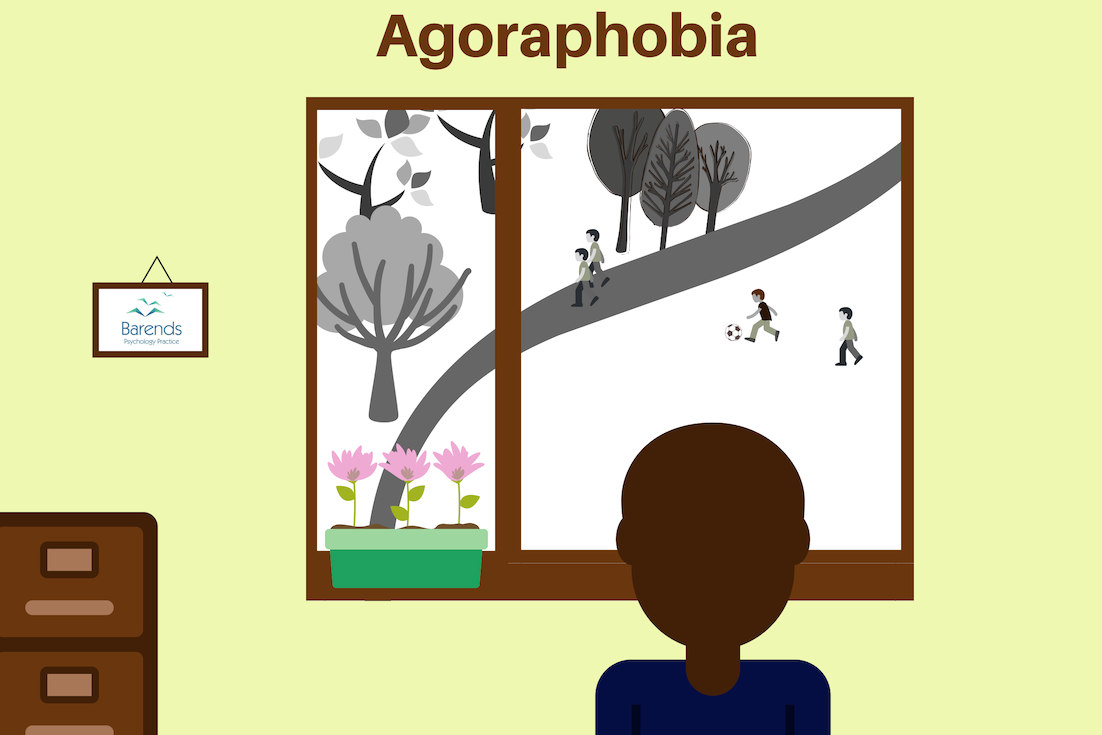
Effective treatment focuses on reducing avoidance and rebuilding confidence
Agoraphobia treatment focuses on breaking the cycle of anxiety, avoidance, and safety behaviours that maintain the problem over time. Although many people associate agoraphobia with a fear of places, it is more accurately understood as a fear of internal experiences, such as panic or loss of control, occurring in situations where escape feels difficult (see agoraphobia symptoms).
In many cases, agoraphobia develops after one or more panic attacks, followed by increasing avoidance and reliance on safety behaviours. Over time, this creates a self-reinforcing pattern in which more and more situations begin to feel unsafe (learn more about the causes of agoraphobia). While this process can feel overwhelming, it is important to know that agoraphobia is a highly treatable condition.
Many people try to cope by avoiding situations or by using strategies that reduce anxiety in the moment. Although this provides short-term relief, it prevents the brain from learning that anxiety is not dangerous. Effective treatment works in the opposite direction: gradually approaching feared situations while reducing avoidance and safety behaviours.
On this page, you will find a clear and structured overview of how agoraphobia treatment works, what to expect in therapy, and how treatment is applied both online and in-person. If you are unsure whether your symptoms fit this pattern, you can also take the agoraphobia test for a first indication.
Key facts about agoraphobia treatment
- Exposure-based therapy is the most effective approach
- Treatment focuses on reducing avoidance and safety behaviours
- Anxiety decreases through repeated exposure, not avoidance
- Progress is gradual and structured
- Online therapy can be highly effective
- Most people see improvement within a few months
Start reducing agoraphobia step by step
With the right guidance, it is possible to gradually expand your world again and regain confidence in everyday situations.
On this page:
How agoraphobia treatment works
Agoraphobia treatment works by targeting the processes that keep the anxiety going. In most cases, agoraphobia is maintained by a self-reinforcing cycle: anxiety is triggered in a situation, the person escapes or avoids it, anxiety drops temporarily, and the brain then learns that avoidance was necessary for safety.
This short-term relief is exactly what makes the problem persist. Each time a situation is avoided, the belief that it is dangerous becomes stronger. Over time, fear often spreads to more situations, and the person’s world can gradually become smaller.
Treatment focuses on breaking this cycle in a structured and manageable way. Instead of organizing life around preventing anxiety, therapy helps you gradually re-enter feared situations while reducing the safety behaviours that maintain the problem. The goal is not to force yourself into overwhelming situations, but to create new learning experiences step by step. You can read a more detailed breakdown of this process on the page about agoraphobia treatment.
A central part of treatment is learning that anxiety, although intense and uncomfortable, is not dangerous. Physical sensations such as dizziness, a racing heart, or feeling unsteady may feel alarming, but they are not signs that something catastrophic is happening. When a person remains in the situation long enough without escaping, the brain has the opportunity to update its predictions.
In this way, treatment does not simply aim to reduce symptoms in the moment. It aims to change the meaning of the situation and the person’s relationship to anxiety itself. Over time, this leads to less fear, less avoidance, and more confidence in handling situations that previously felt impossible.
This process is gradual and individualized. You do not begin with the most difficult task. Instead, therapy starts at a level that feels challenging but manageable, and then builds from there. This may involve first identifying your pattern of agoraphobia symptoms, understanding the underlying agoraphobia causes, or using the agoraphobia test as a starting point. Because agoraphobia is often closely linked to panic attacks, treatment also helps reduce fear of panic-like sensations and the urge to escape from them.
Clinical insight:
“In therapy, I often explain that recovery does not come from proving to yourself that anxiety never appears. It comes from learning that you can stay, function, and let the anxiety pass without organizing everything around escape or control.”
That shift is often the turning point in treatment. When clients begin to see anxiety as something they can tolerate rather than something they must prevent, the grip of agoraphobia usually starts to weaken.
Niels Barends, MSc
Psychologist specialized in anxiety disorders
Exposure-based therapy
The most effective form of agoraphobia treatment is exposure-based therapy, typically as part of Cognitive Behavioral Therapy (CBT). This approach directly targets the mechanisms described in the causes of agoraphobia, particularly avoidance, safety behaviours, and the fear of internal sensations.
Exposure means gradually entering situations that trigger agoraphobia symptoms, without escaping or relying on strategies that artificially reduce anxiety. These situations are not approached randomly, but in a structured and step-by-step way, based on what feels challenging yet manageable.
For example, someone who avoids supermarkets may start by standing near the entrance, then walking inside briefly, and eventually staying longer without leaving prematurely. The goal is not to “push through” anxiety, but to remain in the situation long enough for new learning to take place.
Over time, this leads to several important shifts:
- Anxiety is experienced as temporary and self-limiting
- Physical sensations (e.g., dizziness, heart rate) are understood as uncomfortable but not dangerous
- Confidence increases in the ability to cope without escaping
This process is known as corrective learning. It directly challenges the expectations that maintain agoraphobia, such as “I won’t be able to handle this” or “I need to escape to be safe.” Instead of avoiding situations, the brain learns through experience that these predictions do not come true.
Importantly, exposure also targets the fear of panic attacks. Many people with agoraphobia are not primarily afraid of the situation itself, but of the possibility of panic or losing control in that situation. By staying in the situation and allowing these sensations to rise and fall, the fear of panic gradually decreases as well.
This is why exposure-based therapy is not about eliminating anxiety, but about changing the relationship to it. When anxiety is no longer treated as something dangerous that must be avoided, its intensity and impact begin to reduce naturally.
Clinical insight:
In practice, progress does not come from eliminating anxiety, but from changing how someone responds to it. When clients stop trying to control or avoid anxiety, and instead allow it to rise and fall, the fear gradually loses its intensity.
What often changes first is not the anxiety itself, but the willingness to stay in the situation despite it. From there, confidence grows, avoidance decreases, and the range of “safe” situations expands again.
This shift from control to tolerance is one of the most important turning points in treatment.
Niels Barends, MSc
Psychologist specialized in anxiety disorders
How agoraphobia treatment works online
Online therapy is particularly well-suited for agoraphobia treatment, because it allows you to begin in a safe and familiar environment. For many people, this significantly lowers the threshold to start, especially when leaving the house already triggers anxiety or panic attacks.
In my practice, online treatment is not passive or purely conversational. It is structured, practical, and focused on identifying and changing the patterns behind your agoraphobia symptoms.
Online sessions typically focus on:
- Understanding your specific avoidance patterns and triggers
- Identifying the mechanisms that maintain agoraphobia, such as safety behaviours and fear of internal sensations
- Developing a structured, step-by-step exposure plan
- Guided exercises and assignments between sessions
- Applying exposure directly in your daily environment
A key advantage of online therapy is that we work within the context of your real life. Instead of practicing in an artificial setting, exposure takes place in the environments where anxiety actually occurs, such as your home, your neighborhood, or nearby shops.
This often makes the process more relevant and effective. You are not just talking about situations; you are gradually re-entering them, with guidance and structure.
Another important aspect is that online therapy helps shift the focus from “getting to therapy” to actually working on the problem itself. For many clients, this removes a major barrier and allows treatment to start earlier and progress more consistently.
How treatment works in-person
In-person therapy follows the same core principles as online treatment, reducing avoidance, challenging fear, and building tolerance for anxiety, but offers additional opportunities for direct, real-time guidance.
In my practice, in-person treatment often includes:
- Practicing exposure exercises together in real-world environments
- Gradually entering feared situations step by step
- Observing and adjusting safety behaviours in real time
- Coaching during moments of increased anxiety
This can be particularly helpful in the early stages of treatment, when anxiety feels intense and difficult to manage alone. Having direct support during exposure can increase confidence and reduce the urge to escape prematurely.
At the same time, it is important that progress does not become dependent on the presence of the therapist. The goal remains the same: to help you develop the ability to handle situations independently, without relying on external reassurance.
For this reason, in-person treatment is often combined with independent practice between sessions, ensuring that new learning generalizes to everyday life.
Both online and in-person approaches are effective when applied correctly. The most important factor is not the format, but the consistency of exposure, the reduction of avoidance and safety behaviours, and the willingness to gradually face anxiety rather than avoid it.
What to expect from treatment
For many people, agoraphobia gradually shrinks their world. Situations that once felt normal, going to a shop, taking public transport, being outside alone, start to feel increasingly difficult or even impossible. Over time, life can become organized around avoiding anxiety.
Agoraphobia treatment reverses this process. Instead of your world becoming smaller, it gradually starts to expand again.
Treatment is structured and step-by-step. You do not begin with overwhelming situations. You start at a level that feels challenging but manageable, and build from there. Each step creates new learning, which makes the next step easier.
What often changes first is not the anxiety itself, but your relationship to it. Situations that previously felt unsafe begin to feel more predictable, and the urge to escape becomes less dominant.
Over time, progress typically looks like:
- You begin to re-enter situations you previously avoided
- Your confidence increases, even when anxiety is present
- Physical sensations (e.g., dizziness, heart rate) feel less threatening
- You rely less on safety behaviours or reassurance
- Your independence and freedom gradually return
Many people notice meaningful improvement within a few months. However, the most important factor is consistency. The more you engage with the process, the faster your brain learns that situations are not dangerous.
Without treatment, agoraphobia often stays the same or becomes more restrictive over time. With the right structure and guidance, the opposite happens: your world expands again. You can begin this process yourself by applying practical agoraphobia self-help strategies that focus on gradually reducing avoidance and rebuilding confidence.
You don’t need to eliminate anxiety to recover. You need to learn that you can handle it without avoiding your life.
Start working on agoraphobia today
You don’t have to figure this out on your own. With the right structure, meaningful progress is possible.
Author:
Niels Barends, MSc, psychologist with over 14 years of experience specializing in anxiety disorders and exposure-based treatment.
Last reviewed: April 2026
Frequently asked questions about agoraphobia treatment
What is the most effective treatment for agoraphobia?
Exposure-based therapy within CBT is the most effective treatment. It focuses on gradually facing feared situations while reducing avoidance and safety behaviours.
How long does treatment take?
Many people notice improvement within a few months, but the overall duration depends on consistency, severity, and how often exposure is practiced between sessions.
Can agoraphobia be treated online?
Yes. Online therapy is highly effective and often easier to start, especially for individuals who find it difficult to leave their home. It allows treatment to begin in a familiar and safe environment.
Does medication help?
Medication can reduce symptoms, but it does not change the underlying patterns that maintain agoraphobia. Therapy is needed to address avoidance, fear of sensations, and behavioural patterns. For an overview of treatment options, see
this NHS guide on agoraphobia treatment.
What if I feel too anxious to start?
Treatment always starts at a manageable level. You do not begin with the most difficult situations. Instead, therapy is structured so that each step feels challenging but achievable.
Can agoraphobia go away on its own?
Symptoms may fluctuate, but without treatment agoraphobia often persists because avoidance reinforces the fear. Structured treatment helps break this cycle and create lasting change.
What happens during exposure therapy?
You gradually enter situations that trigger anxiety while staying long enough for the anxiety to decrease naturally. This helps your brain learn that the situation is safe and that you can cope without escaping.
Do I have to eliminate anxiety to recover?
No. Recovery is not about eliminating anxiety completely, but about learning that you can handle it without avoiding your life. As this confidence grows, anxiety usually decreases on its own.
When should I seek treatment?
If you notice increasing avoidance, fear spreading to more situations, or a growing restriction in your daily life, it is advisable to seek help. Early treatment can prevent symptoms from becoming more severe.